New Jersey Soil Remediation and Contaminated Soil Cleanup
Contaminated soil can create significant environmental, financial, and real estate concerns for a New Jersey property owner. ERC Environmental provides comprehensive
soil remediation in NJ, with a particular focus on petroleum contamination caused by leaking underground heating oil tanks, aboveground tanks, damaged fuel lines, and historic oil spills.
Our team manages the remediation process from removal of the contamination source through excavation, disposal, confirmatory sampling, NJDEP documentation, backfilling, and restoration to rough grade. Whether you are responding to a leaking oil tank, addressing an NJDEP spill case, or trying to keep a property transaction moving, ERC provides a clear path toward environmental closure.
ERC performs remediation in accordance with applicable New Jersey Department of Environmental Protection requirements, including the Heating Oil Tank System Remediation Rules and current state soil and groundwater remediation standards. Our
flat-rate policy is designed to give property owners greater cost certainty throughout the covered cleanup, documentation, and restoration process.
We serve homeowners, buyers, sellers, real estate professionals, attorneys, insurance carriers, and commercial property owners throughout New Jersey.
When Is Soil Remediation Required in New Jersey?
Soil remediation generally becomes necessary when a petroleum discharge is discovered and the affected soil exceeds an applicable NJDEP cleanup standard. Not every oil tank removal leads to remediation. Many tanks are removed intact, with no evidence that oil escaped into the surrounding soil.
Conditions that may trigger contaminated soil cleanup include:
- Visible holes or corrosion in a removed underground oil tank
- Oil staining or petroleum odors in the surrounding soil
- A confirmed release from an aboveground heating oil tank
- Contamination caused by a damaged fill, return, or supply line
- Laboratory results showing petroleum contamination above an applicable standard
- A discharge reported to the NJDEP and assigned a spill case number
- Contamination discovered during a property sale, refinance, or environmental investigation
- Evidence that a petroleum release may have reached groundwater
The required response depends on the source, contaminant, affected area, soil conditions, groundwater depth, and use of the property. Our guide to
what triggers mandatory soil remediation in New Jersey explains when a contamination issue requires corrective action.
What Is Soil Remediation?
Soil remediation is the process of removing, treating, containing, or otherwise addressing contaminated soil so that a property satisfies the applicable environmental requirements.
For petroleum contamination associated with a heating oil tank, remediation commonly involves:
- Stopping and removing the source of the discharge
- Determining the extent of the affected area
- Excavating soil that exceeds the applicable cleanup standard
- Transporting contaminated soil to an approved treatment or disposal facility
- Evaluating groundwater when site conditions indicate that it may have been affected
- Collecting confirmatory samples after excavation
- Preparing the required remediation reports and closure documentation
- Backfilling the excavation with clean material
Environmental cleanup is not complete simply because visibly stained soil has been removed. Confirmatory laboratory results are used to determine whether the remaining soil satisfies the applicable standards. Our guide to
NJDEP soil cleanup standards explains how those requirements affect New Jersey property owners.
Oil Tank Soil Remediation in New Jersey
Leaking heating oil tanks are among the most common reasons residential properties require soil remediation in New Jersey. Many older homes contain active, abandoned, or previously decommissioned tanks that were installed decades ago.
Underground steel tanks can corrode over time. A small hole may allow heating oil to escape gradually into the surrounding soil without producing an immediate or obvious warning inside the home.
Petroleum contamination may remain close to the tank, move through the surrounding soil, or travel downward toward groundwater. The extent depends on factors such as:
- The size and duration of the leak
- The type of petroleum product released
- The depth and location of the tank
- Soil composition and drainage conditions
- The depth and movement of groundwater
- Nearby foundations, utilities, wells, and property boundaries
If contamination originated from a leaking tank, removing the source is normally the first step. ERC provides complete
underground oil tank removal in New Jersey, including permitting, utility markouts, excavation, tank cleaning, removal, disposal, and municipal inspection.
The ERC Soil Remediation Process
Every property is different, but an oil-tank-related soil remediation generally follows a defined sequence. ERC coordinates each stage to keep the project moving while creating the documentation needed by the homeowner, municipality, NJDEP, insurer, attorney, buyer, or lender.
1. Review the Property and Contamination Source
The project begins with a review of the available information about the property and the suspected or confirmed discharge. This may include:
- The age, size, location, and condition of the tank
- Observations made during tank removal
- Municipal permit and inspection records
- Existing laboratory results
- NJDEP spill documentation
- Historic uses of the property
- Previous environmental investigations or cleanup work
A historical review may reveal former land uses or environmental conditions that were unknown to the current owner. Understanding the property’s history helps distinguish the current petroleum discharge from unrelated or preexisting conditions.
2. Stop and Remove the Source
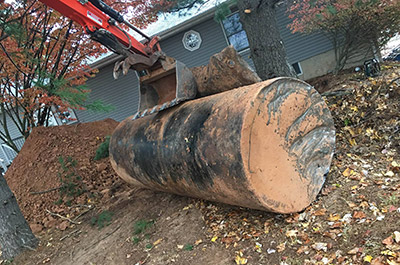
The source of contamination must be controlled before the surrounding property can be effectively remediated. If the release originated from a leaking heating oil tank, ERC will carefully excavate and remove the tank so that additional oil cannot continue entering the soil.
ERC coordinates the required municipal permits and utility markouts before construction begins. The tank is uncovered, cleaned, removed from the property, and made available for the required inspection.
Learn more about
how the New Jersey oil tank removal process works and what property owners should expect during each stage.
3. Define the Area Requiring Remediation
Once the source is controlled, available observations and laboratory data are used to determine where remediation is required. The purpose is to define the affected area accurately enough to remove contaminated material without unnecessarily disturbing unaffected portions of the property.
The scope may be influenced by the tank’s condition, visible staining, petroleum odors, previous analytical results, nearby structures, utilities, soil characteristics, groundwater depth, and the direction in which the discharge appears to have moved.
4. Excavate Contaminated Soil
ERC uses properly maintained excavation equipment to remove petroleum-contaminated soil from the affected area. The excavation method depends on the depth and extent of contamination, site accessibility, nearby structures, landscaping, utilities, and other property-specific conditions.
The objective is to remove the soil required to satisfy applicable remediation standards while limiting unnecessary disruption to the property.
5. Transport and Dispose of Contaminated Material
Excavated soil must be properly contained, transported, and delivered to an appropriate treatment or disposal facility. Contaminated material should not be spread elsewhere on the property or mixed with clean backfill.
ERC coordinates the handling and removal of excavated material as part of the remediation project. Disposal requirements depend on the type and concentration of contamination and the receiving facility’s acceptance criteria.
6. Address Groundwater When Necessary
Some petroleum releases remain limited to the soil surrounding the tank. Others may extend toward or reach groundwater, particularly when the tank is deep, the discharge continued for a long time, or groundwater is relatively shallow.
If groundwater has been affected, additional remedial work may be necessary. Depending on the site conditions and NJDEP requirements, groundwater may be recovered, treated, transported for disposal, monitored, or addressed using another approved method.
ERC will explain whether groundwater is part of the remediation scope and what additional steps are required.
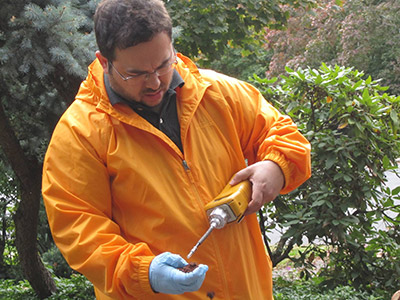
7. Perform Confirmatory Sampling
Removing visibly contaminated soil is not enough to demonstrate that remediation is complete. After excavation, confirmatory samples are collected from appropriate areas to determine whether the remaining soil satisfies the applicable cleanup standards.
If the results remain above an applicable standard, additional excavation or another remedial step may be required. When the results confirm that the required cleanup level has been achieved, the project can proceed toward closure.
8. Backfill and Restore the Excavation
After the necessary remediation work and confirmatory sampling have been completed, ERC backfills the excavation with clean material and restores the area to rough-grade condition.
The specific restoration work included in the project should be identified in the written proposal before remediation begins.
9. Complete NJDEP Documentation
When an unregulated heating oil tank discharge is involved, the environmental professional prepares and submits the required remediation documentation to the NJDEP.
A
No Further Action letter is a final document issued by the NJDEP confirming that no additional remediation is required for the contamination addressed in the approved submission.
Obtaining appropriate closure documentation is especially important when selling, refinancing, or insuring the property. A verbal statement that contaminated soil was removed is not equivalent to documented regulatory closure.
Watch our video for an overview of ERC’s environmental remediation process.
NJDEP Soil Remediation Requirements
Heating oil tank discharges in New Jersey are governed by specific state requirements. The
NJDEP Unregulated Heating Oil Tank Program outlines the process for investigating and remediating discharges from qualifying residential heating oil tank systems.
Depending on the source, property, and extent of contamination, the applicable framework may include:
- The Heating Oil Tank System Remediation Rules under N.J.A.C. 7:26F
- The NJDEP Remediation Standards under N.J.A.C. 7:26D
- Applicable groundwater quality standards
- Spill reporting requirements
- Contaminated soil handling and disposal requirements
- Confirmatory sampling and laboratory analysis
- Municipal permits and tank-removal inspections
- Remediation reports and final closure documentation
The correct procedure depends on the property type, tank size, contaminant, and scope of the release. ERC explains the requirements that apply to the project in plain language and coordinates the necessary fieldwork and documentation.
How Much Does Soil Remediation Cost in NJ?
The cost of soil remediation in New Jersey depends on several factors:
- The amount of contaminated soil
- The depth of the excavation
- Access for excavation and transport equipment
- Nearby foundations, utilities, wells, or property boundaries
- Transportation and disposal requirements
- Whether groundwater has been affected
- Confirmatory sampling and laboratory requirements
- Permits and NJDEP documentation
- The amount of clean backfill needed
Open-ended environmental contracts can make it difficult for property owners to understand their total financial exposure. ERC’s flat-rate approach is designed to establish the covered scope and expected cost before work begins, reducing the risk of repeated change orders and unexpected charges.
Our written proposal explains what is included, what assumptions the price is based on, and what circumstances may fall outside the agreed scope. This allows homeowners, buyers, sellers, attorneys, and insurers to evaluate the project using a defined plan rather than a vague estimate.
Learn more about our
flat-rate New Jersey soil remediation services.
Can Insurance Cover Soil Remediation?
Homeowners insurance may provide coverage in certain situations, but coverage depends on the policy language, date and cause of the discharge, ownership history, prior claims, exclusions, and whether a covered third-party liability issue exists.
Coverage should not be assumed simply because petroleum contamination has been discovered.
ERC can communicate with your insurance carrier when appropriate, provide requested project documentation, and explain the physical scope of the remediation. The insurance company ultimately determines whether the claim is covered under the policy.
Soil Remediation During a New Jersey Property Sale
Contaminated soil can complicate a home sale by creating uncertainty for buyers, attorneys, lenders, and insurance carriers. Questions about the extent of the problem, cleanup cost, responsibility, and regulatory closure can delay negotiations or prevent a transaction from moving forward.
If contamination is discovered while a property is under contract, obtaining a defined remediation plan and written price quickly can give the parties a factual basis for negotiation.
Completing the remediation and obtaining the appropriate documentation can resolve an environmental condition that might otherwise remain attached to the property. Our guide to
how contaminated soil affects a New Jersey home’s value explains why buyers, lenders, and insurers take these conditions seriously.
Why Choose ERC for Soil Remediation in NJ?
ERC combines environmental experience, excavation capabilities, petroleum-contaminated soil removal, regulatory coordination, and property restoration within one managed process. Property owners do not have to coordinate separate companies for every stage of an oil-tank-related cleanup.
- More than 30 years of New Jersey experience: Our team understands the state’s older housing stock, soil conditions, municipal requirements, and history of underground heating oil tanks.
- Flat-rate pricing: The covered scope and expected cost are established before work begins.
- Complete project coordination: ERC coordinates source removal, excavation, contaminated soil disposal, confirmatory sampling, documentation, backfilling, and rough-grade restoration.
- Responsive scheduling: We understand that remediation is often connected to an active real estate or financing deadline.
- Clear communication: We explain the remediation requirements, project scope, results, and next steps without unnecessary jargon.
- Practical recommendations: We recommend the work supported by the site conditions, laboratory findings, and applicable requirements.
Frequently Asked Questions About Soil Remediation in NJ
What is contaminated soil remediation?
Contaminated soil remediation is the process of removing, treating, containing, or otherwise addressing polluted soil so that a property meets applicable environmental requirements. For heating oil contamination, this frequently involves source removal, excavation, disposal, confirmatory sampling, backfilling, and regulatory documentation.
Does every leaking oil tank require soil remediation?
If a tank discharged oil and the surrounding soil exceeds an applicable cleanup standard, remediation will generally be required. The scope depends on the amount of contamination, affected area, soil conditions, and whether groundwater was impacted.
How is petroleum-contaminated soil removed?
The affected soil is typically excavated using construction equipment, properly contained, transported, and delivered to an appropriate treatment or disposal facility. Confirmatory samples are then collected to determine whether the required cleanup level has been achieved.
How much does soil remediation cost in New Jersey?
The cost depends on the amount and depth of contaminated soil, site accessibility, disposal requirements, groundwater involvement, confirmatory sampling, permits, documentation, and restoration. ERC provides a written proposal identifying the covered scope and expected price before remediation begins.
How long does soil remediation take?
The fieldwork for a straightforward residential heating-oil release may be completed relatively quickly. The complete timeline also depends on permits, excavation scope, disposal arrangements, laboratory turnaround, confirmatory results, and NJDEP review. ERC provides a project-specific timeline after evaluating the available information.
What happens if oil reaches groundwater?
If groundwater has been affected, additional evaluation and remediation may be required. The appropriate method depends on the contaminant, concentration, groundwater conditions, affected area, and NJDEP requirements.
Can I sell a property while soil remediation is underway?
A property may potentially be sold while remediation is pending, but unresolved contamination can create disclosure, financing, insurance, negotiation, and closing complications. Many buyers and lenders prefer the remediation to be completed and properly documented before closing.
What is an NJDEP No Further Action letter?
A No Further Action letter is a final remediation document issued by the NJDEP for qualifying cases. It confirms that the department has determined that no additional remediation is required for the contamination addressed in the submission.
Does ERC handle the entire remediation process?
ERC coordinates source removal, contaminated soil excavation, transportation and disposal, confirmatory sampling, backfilling, rough-grade restoration, and applicable project documentation. The precise services included are identified in the written proposal.
Request a New Jersey Soil Remediation Estimate
If petroleum-contaminated soil has been discovered on your property, ERC Environmental can explain what needs to happen next and provide a defined remediation plan.
Our team provides soil remediation throughout New Jersey with transparent pricing, responsive scheduling, and complete project coordination.
- Understand covered costs from the beginning.
- Receive a clear remediation scope.
- Reduce delays during a property transaction.
- Coordinate excavation, disposal, documentation, and restoration.
- Request an estimate within hours.
Call
877-440-TANK (8265) or
800-440-8265 to discuss your property.
You can also complete the form below, and a member of the ERC team will contact you within 24 hours.