Gas Line Installation for an Oil-to-Gas Conversion in New Jersey
Quick answer: A New Jersey oil-to-gas conversion usually has two connected gas-line scopes. The serving utility confirms availability and generally installs or upgrades the service line and meter. A properly licensed New Jersey master plumber or HVACR contractor installs the customer-side piping and equipment. The old heating-oil tank is a separate part of the project and must also be properly addressed and documented.
ERC Environmental provides oil-to-gas conversion services in New Jersey, including the environmental and oil-tank work that can otherwise become disconnected from the heating project. Call 877-440-8265 or request a property-specific estimate.
Who Installs Each Part of a Residential Gas Line?
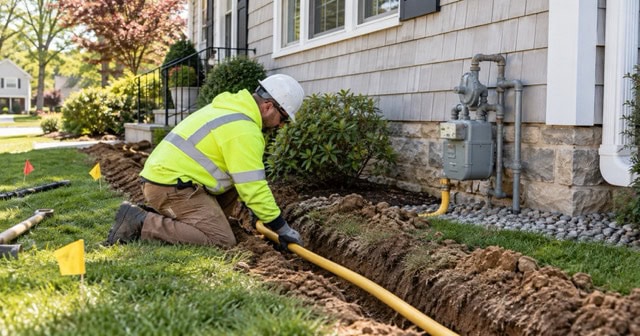
Most projects have a utility side and a customer side. The exact responsibilities, costs, and schedules vary by utility and property, but the work is usually divided as follows:
- Street main to gas meter: The serving gas utility evaluates main availability, capacity, the service route, meter location, and any utility-side charges or allowances.
- Gas meter to appliances: A properly licensed New Jersey master plumber or HVACR contractor sizes and installs the customer-side piping and connects the approved equipment.
- Heating equipment: The appropriate licensed contractor installs the boiler, furnace, water heater, or other gas appliances included in the conversion.
- Old oil system: A qualified oil-tank contractor handles the tank closure or removal, inspection, and required records. If a discharge is found, environmental investigation and remediation may also be necessary.
These may be separate contracts, or one contractor may coordinate multiple portions of the job. Get a written scope that assigns the utility application, permits, inspections, meter scheduling, excavation, restoration, equipment, and oil-tank work.
How Gas Line Installation Works in New Jersey
- Confirm natural-gas availability. Contact the utility serving the property—such as PSE&G, New Jersey Natural Gas, South Jersey Gas, or Elizabethtown Gas—and ask whether a main and adequate capacity are available.
- List every planned gas appliance. Include the heating system, water heater, range, dryer, fireplace, pool heater, and any future standby generator. The total fuel load affects service, meter, and pipe sizing.
- Obtain the utility’s written scope. Ask about the proposed route, meter location, estimated schedule, applicable charges or allowances, and who restores disturbed surfaces.
- Design the customer-side system. The licensed contractor determines pipe size, routing, equipment requirements, venting, and related electrical or chimney work.
- Secure permits and mark out utilities. New or altered gas piping generally requires a local construction permit. Before excavation, the responsible excavator must request a New Jersey One Call markout.
- Install the service, piping, and equipment. Utility and contractor schedules must be coordinated so each part is ready in the correct order.
- Complete testing and inspections. Customer-side piping is pressure-tested and inspected as required before the utility sets or activates the meter.
- Address the old oil system. Plan the shutdown and tank work so the home retains dependable heat and the tank is properly closed or removed and documented.
What Affects Gas Line Installation Cost in NJ?
There is no dependable statewide price per foot for a residential gas installation. Utility service and customer-side piping cover different work, while a complete oil-to-gas conversion also includes equipment and tank costs.
Utility-Side Cost Factors
- Whether a natural-gas main is already available near the property
- The distance and route from the main to the meter
- Whether the utility must extend or upgrade its system
- The property’s total gas load and required meter capacity
- Road openings, driveways, retaining walls, landscaping, and other obstacles
- The utility’s current tariff, service allowance, and restoration policy
Customer-Side Cost Factors
- Pipe length, diameter, material, and number of branches
- The number and type of gas appliances
- Access through finished walls, ceilings, crawl spaces, or concrete
- Exterior trenching and surface restoration
- Permit and inspection fees
- Boiler or furnace replacement, venting, electrical work, and chimney modifications
For equipment, piping, permit, and tank-removal considerations, review ERC’s complete oil-to-gas conversion cost guide. Incentives may be available for qualifying high-efficiency equipment, but eligibility and amounts change. Verify current terms before budgeting a rebate.
Planning a conversion? ERC can review the property, explain the conversion and tank-removal scopes, and provide a clear estimate before work begins. Call 877-440-8265 or contact ERC Environmental online.
How Long Does a New Gas Service Installation Take?
Allow several weeks for the complete process. The physical piping and equipment installation may be relatively brief, but utility design, permits, excavation scheduling, municipal inspections, and meter activation often control the timeline.
Schedules differ by utility and property. Main extensions, weather, road-opening approvals, difficult excavation, failed inspections, or changes to the planned appliance load can add time. Start with the utility before setting a firm conversion date, and keep reliable heat until the replacement plan is coordinated.
Gas Line Permits, Licensing, and Safe Excavation
New or altered customer-side gas piping generally requires a permit through the local construction office. In New Jersey, gas piping may be installed by a licensed master plumber or licensed HVACR contractor whose license covers the work. Confirm that the contractor is properly licensed for the complete scope.
The installation must be sized for the connected load and tested under the applicable code. The local inspection and any utility safety requirements must be satisfied before the new meter is set or activated.
For outside excavation, the responsible excavator must contact New Jersey One Call at 811 at least three full business days before digging. A standard markout may not identify privately owned facilities such as irrigation lines, invisible fencing, septic components, private electric lines, or old oil lines. Those features should be identified separately before excavation begins.
What Happens to the Oil Tank After You Convert to Gas?
Activating natural gas does not automatically close an old heating-oil tank. The tank, fill and vent piping, remaining oil, municipal permit, and environmental documentation require a separate plan.
New Jersey recognizes both removal and qualifying abandonment-in-place for unregulated heating-oil tanks. The work must follow applicable requirements and be performed by a certified tank-closure contractor. ERC specializes in underground oil tank removal because removal provides direct access to inspect the tank and surrounding excavation and to perform targeted sampling when appropriate.
Removal alone does not guarantee that soil is clean. Tank condition, field observations, testing when required, permit closeout, and final records establish what was found. Evidence of a discharge must be reported and addressed through the NJDEP process. ERC also provides soil testing and remediation when a release is identified.
A non-leaking tank is not automatically subject to a statewide removal mandate solely because a home converts to gas. However, an undocumented or unresolved tank can raise questions during a future sale. Read more about whether an oil tank must be removed in New Jersey.
What Should a Complete Quote Include?
Before selecting a contractor, confirm that the proposal identifies:
- The utility-side and customer-side work
- The gas pipe route, size, and appliances included
- Who submits permits and schedules inspections
- Excavation, private-facility locating, and surface restoration
- Meter and utility coordination
- Heating equipment, venting, electrical, and chimney work
- Oil-system disconnection and remaining-oil handling
- Tank removal or closure and applicable soil evaluation
- Final documentation, exclusions, and change-order terms
A coordinated price can be convenient, but it should still show what is included. That makes estimates easier to compare and reduces late surprises.
Why New Jersey Homeowners Choose ERC Environmental
- More than 30 years of New Jersey experience with oil tanks, environmental work, and fuel conversions
- Coordinated planning for the gas-conversion and old-oil-system portions of the project
- Clear scopes and pricing so homeowners understand what is included before work starts
- Permit and documentation support for current records and future real-estate needs
- Statewide service for New Jersey homeowners
Frequently Asked Questions
Who Installs the Gas Line From the Street to a New Jersey Home?
The serving gas utility generally evaluates and installs or upgrades the service line from its main to the meter. Availability, charges, included footage, route, and restoration policies vary, so request a written utility scope for the property.
Who Installs the Gas Piping From the Meter to the Appliances?
A properly licensed New Jersey master plumber or HVACR contractor typically installs customer-side gas piping. The contractor should size the system for the total connected load and obtain the applicable local permit.
How Much Does Gas Line Installation Cost in NJ?
There is no single statewide price. Cost depends on main availability, service length, utility allowances, meter capacity, customer-side pipe length and size, appliance load, excavation, access, permits, and restoration. Obtain written scopes from both the utility and the contractor before approving the project.
Is a Permit Required for a New Gas Line?
Generally, yes. New or altered customer-side gas piping requires a local construction permit, testing, and inspection. Your contractor and utility can identify the approvals required for the exact project.
How Long Does New Gas Service Take?
Plan for several weeks rather than several days. Utility engineering, permits, crew availability, weather, inspection, and meter scheduling can take longer than the physical installation itself.
Does Converting to Gas Remove or Close My Oil Tank?
No. Gas service and oil-tank closure are separate scopes. The tank must be properly removed or otherwise closed and documented under the requirements that apply to the property.
Should the Oil Tank Be Removed Before or After the Gas Conversion?
The best sequence depends on the season, equipment schedule, and tank location. Coordinate the work before starting so the home keeps reliable heat and the old tank is addressed promptly, without creating an avoidable project delay.
Plan the Gas Conversion and Oil-Tank Work Together
If you are switching from oil to natural gas, ERC Environmental can help coordinate the conversion, remove the old underground tank, and provide the records you may need for the property and a future sale.
Call 877-440-8265 or contact ERC Environmental online for a property-specific estimate. For the fastest response, include the property address, serving gas utility, planned gas appliances, and whether the oil tank is aboveground or underground.
Last reviewed: October 2026
Or fill out the form below and we’ll respond within one business day