Low-Level vs. High-Level Oil Tank Soil Contamination in New Jersey
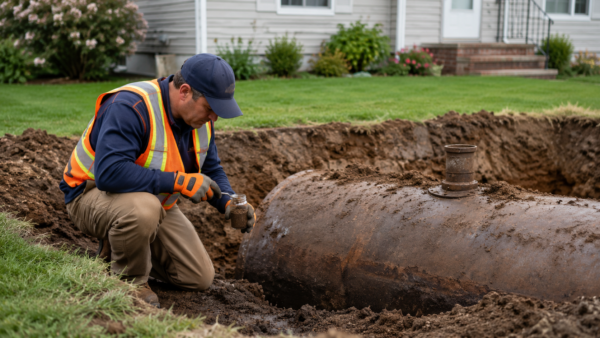
Finding out that an underground heating-oil tank leaked can be alarming, especially when cleanup estimates vary widely. The difference usually comes down to more than a single laboratory result: the concentration of petroleum, how far it has spread, and whether soil, groundwater, bedrock, a well, a structure, or a neighboring property is affected all influence the scope.
Quick answer: “Low-level” and “high-level” contamination are not formal NJDEP classifications. They are useful shorthand. A lower-level oil tank release is generally localized in soil near the tank and has not affected groundwater. A higher-level release may involve elevated readings, a larger volume of soil, groundwater impact, difficult site conditions, or contamination that has moved away from the tank. Groundwater and the total extent of contamination are usually the biggest cost drivers.
If you already have an oil tank removal report or laboratory results, ERC Environmental can review them and explain what the findings may mean. Call 877-440-8265 or request an evaluation online.
Low-Level vs. High-Level Contamination at a Glance
| Factor | Lower-Level or Localized Impact | Higher-Level or Complex Impact |
|---|---|---|
| Location | Concentrated near the tank or piping | Extends beyond the original tank excavation |
| Soil | Limited volume of affected soil | Larger volume, deeper impact, or contamination beneath a structure |
| Groundwater | No confirmed groundwater impact | Groundwater is affected or requires investigation |
| Testing | Limited confirmation sampling may be sufficient | Delineation and repeated sampling may be required |
| Timeline | Often days to several weeks | Often weeks to months or longer |
| Cost | Usually lower and more predictable | Highly site-specific and potentially much higher |
The only reliable way to determine which situation you have is to evaluate the tank, collect representative samples, and determine the horizontal and vertical extent of the release when necessary.
What Separates a Small Oil Tank Leak From a Major Cleanup?
Three questions matter most:
- How concentrated is the petroleum? Laboratory results show how much of a contaminant is present in the sampled soil.
- How far has it traveled? A small area beneath a corroded tank is different from contamination extending toward a foundation, property line, well, or deeper soil.
- Has it affected groundwater? Once groundwater is involved, the project may require additional investigation, monitoring, treatment, and documentation.
A high reading does not, by itself, reveal the total cleanup cost. A highly concentrated but tightly contained area may be easier to address than lower concentrations spread across a large area or reaching groundwater.
That is why proper delineation—the process of finding the boundaries and depth of the contamination—is more useful than guessing from one sample.
How New Jersey Evaluates Heating-Oil Contamination
Heating-oil releases at New Jersey homes are commonly evaluated through the state’s Heating Oil Tank System and Unregulated Heating Oil Tank framework. Laboratory testing and site conditions are considered together.
EPH and the 5,300 mg/kg Soil Standard
Extractable petroleum hydrocarbons, or EPH, are the heavier petroleum compounds commonly associated with heating oil. NJDEP currently identifies 5,300 milligrams per kilogram (mg/kg) as the soil remediation standard for EPH.
The separate 1,000 mg/kg figure is not the general residential EPH cleanup standard. Under NJDEP’s UHOT sampling framework, an EPH result above 1,000 mg/kg triggers additional analysis for naphthalene and 2-methylnaphthalene. Those compounds have their own standards and must be evaluated separately.
This distinction matters. A sample below 5,300 mg/kg does not automatically answer every site question, and a sample above 1,000 mg/kg does not automatically mean extensive excavation is required. The full evaluation may also consider:
- Naphthalene and 2-methylnaphthalene results
- The impact-to-groundwater pathway
- Actual groundwater conditions
- The depth and extent of affected soil
- Nearby wells, buildings, utilities, bedrock, and property boundaries
See the NJDEP Unregulated Heating Oil Tank Program and our explanation of what triggers soil remediation in New Jersey for more detail.
What Lower-Level Oil Tank Contamination Usually Looks Like
A localized release may be discovered when a tank is removed and corrosion, a hole, stained soil, an odor, or an elevated sample result is found. Lower-level cases commonly have several of these characteristics:
- The impact is limited to soil immediately around or beneath the tank.
- Groundwater is not affected.
- The excavation is accessible to normal equipment.
- The affected soil can be removed without undermining a building or major structure.
- Confirmation samples can establish that the remaining soil meets applicable requirements.
Some localized impacts can be addressed during or shortly after oil tank removal. Other cases require additional sampling before the appropriate remedy can be selected.
“Localized” does not mean the condition can be ignored. It means the scope is generally easier to define and control.
What Higher-Level Contamination Usually Looks Like
A more complex release may involve one or more of the following:
- Petroleum has moved beyond the original tank excavation.
- Multiple samples show elevated concentrations.
- Contamination extends deeper than expected.
- Groundwater, bedrock, a private well, or another sensitive receptor may be affected.
- Soil has migrated beneath a foundation, driveway, utility, or neighboring property.
- The site requires monitoring wells, repeated sampling, engineering controls, or a more involved remedy.
These conditions do not automatically mean the worst-case scenario. They do mean that the project must be properly delineated before anyone can provide a dependable cleanup scope or cost.
What Does Oil Tank Soil Remediation Cost in New Jersey?
There is no reliable flat price for contamination cleanup because two sites with similar initial EPH results can require very different work. The principal cost factors are:
- The volume and depth of affected soil
- Excavator and truck access
- Disposal and backfill quantities
- Whether contamination is beneath a structure or hardscape
- Groundwater or bedrock involvement
- The number of sampling events required
- Monitoring wells, treatment, or engineering controls
- Professional oversight and closure documentation
For national context, the EPA states that cleanup involving only a small amount of soil may cost as little as $10,000. Across federally regulated underground storage tank sites, the EPA estimates an average cleanup cost of approximately $154,000, while groundwater cases can range from $100,000 to more than $1 million.
Those EPA figures include commercial and other federally regulated UST sites. They are not estimates for a typical New Jersey residential heating-oil cleanup and should not be treated as a quote. They illustrate why the extent of the release—and especially groundwater involvement—matters much more than the tank’s removal price.
ERC provides a property-specific scope after reviewing the available records, sampling data, access, and site conditions. Oil tank removal cost and contamination remediation should be presented as separate scopes so homeowners understand what is known before work begins.
How Long Does Soil Cleanup Take?
Localized soil-only cases may be completed within days to several weeks once permits, disposal, sampling, and laboratory turnaround are considered. The physical excavation may be brief, while testing and documentation take longer.
More complex cases can take weeks to months or longer. Delineation, groundwater monitoring, access beneath structures, multiple rounds of sampling, and regulatory review can extend the schedule.
A typical process may include:
- Removing the tank and stopping the source of the release
- Inspecting the tank and excavation
- Collecting soil samples
- Delineating the horizontal and vertical extent when required
- Evaluating groundwater and other pathways when applicable
- Removing or treating affected material
- Collecting confirmation samples
- Preparing the documentation needed for closure or a No Further Action letter, when applicable
If the work is connected to a sale, share the inspection-response and closing dates immediately. See our oil tank removal timeline for the steps that occur before remediation begins.
Can Insurance or a New Jersey Grant Help?
Possibly, but neither should be treated as guaranteed funding.
Insurance coverage depends on the policy language, the cause and timing of the release, notice requirements, and whether a covered third-party claim exists. Notify the carrier promptly and ask for a written coverage determination.
New Jersey also maintains financial-assistance programs for eligible underground heating-oil tank projects. Eligibility, available funding, documentation requirements, and processing time can change. Review the current NJDEP UHOT funding information before including potential assistance in your budget.
Avoid These Costly Oil Tank Cleanup Mistakes
- Accepting an open-ended per-cubic-yard contract without understanding the scope
- Assuming one sample defines the entire contaminated area
- Excavating only the visibly stained soil without proper delineation
- Relying on a verbal statement that the soil is clean without laboratory documentation
- Assuming insurance or grant funding will automatically pay the bill
- Choosing abandonment in place without understanding the environmental and real estate consequences
The safest approach is to document what was found, define the extent of the release, and select a remedy that can support proper closure.
How ERC Environmental Handles Oil Tank Contamination
ERC Environmental has more than 30 years of experience with oil tank removal, soil testing, and remediation in New Jersey. Our approach includes:
- Clear separation between the tank-removal price and remediation work
- Site-specific sampling and delineation when required
- Straightforward explanations of laboratory results and cost drivers
- Documentation designed to support proper case closure
- Prompt communication for active leaks and real estate deadlines
- Full tank removal rather than abandonment in place
ERC removes and installs heating-oil tanks and provides soil testing and remediation. If the available evidence does not support extensive work, we will explain that too.
Oil Tank Soil Contamination FAQs
Are “Low-Level” and “High-Level” Official NJDEP Classifications?
No. They are practical terms used to describe the likely complexity of a release. NJDEP decisions are based on laboratory results, applicable standards, the extent of contamination, exposure pathways, groundwater, and site-specific conditions.
What EPH Level Requires Soil Remediation in New Jersey?
NJDEP currently lists 5,300 mg/kg as the EPH soil remediation standard. Results above 1,000 mg/kg also trigger additional analysis for naphthalene and 2-methylnaphthalene under the UHOT sampling framework. The entire data set and site conditions must be evaluated before deciding what work is required.
How Do I Know Whether an Oil Tank Leak Reached Groundwater?
Soil depth, field observations, laboratory results, and the known or measured depth to groundwater help determine whether groundwater evaluation is necessary. Confirmation may require groundwater sampling or monitoring wells.
Does Localized Contamination Always Require Excavation?
Not necessarily. The appropriate response depends on the laboratory results, applicable standards, pathways, and site conditions. Some affected soil can remain when it satisfies New Jersey requirements; other soil must be removed or treated.
What Makes an Oil Tank Cleanup Expensive?
The largest cost drivers are the volume and depth of contamination, restricted access, impact beneath structures, groundwater involvement, repeated sampling, treatment, and the documentation required to close the case.
Can ERC Review Another Contractor’s Laboratory Results?
Yes. Send the report, laboratory data, tank-removal documentation, property address, and any closing deadline. ERC can review the available information and explain the likely next step, although additional site work may be needed to confirm the complete scope.
Get a Clear Answer About Your Oil Tank Leak
If you have conflicting estimates or laboratory results you do not understand, ERC Environmental can help you determine what is known, what still needs to be tested, and what it may take to resolve the condition.
Call 877-440-8265 or request a consultation online. Include the property address, tank-removal report, laboratory results, photographs, and any real estate deadline for the most useful initial review.
Last updated: September 2026
Or fill out the form below and we’ll respond within one business day